
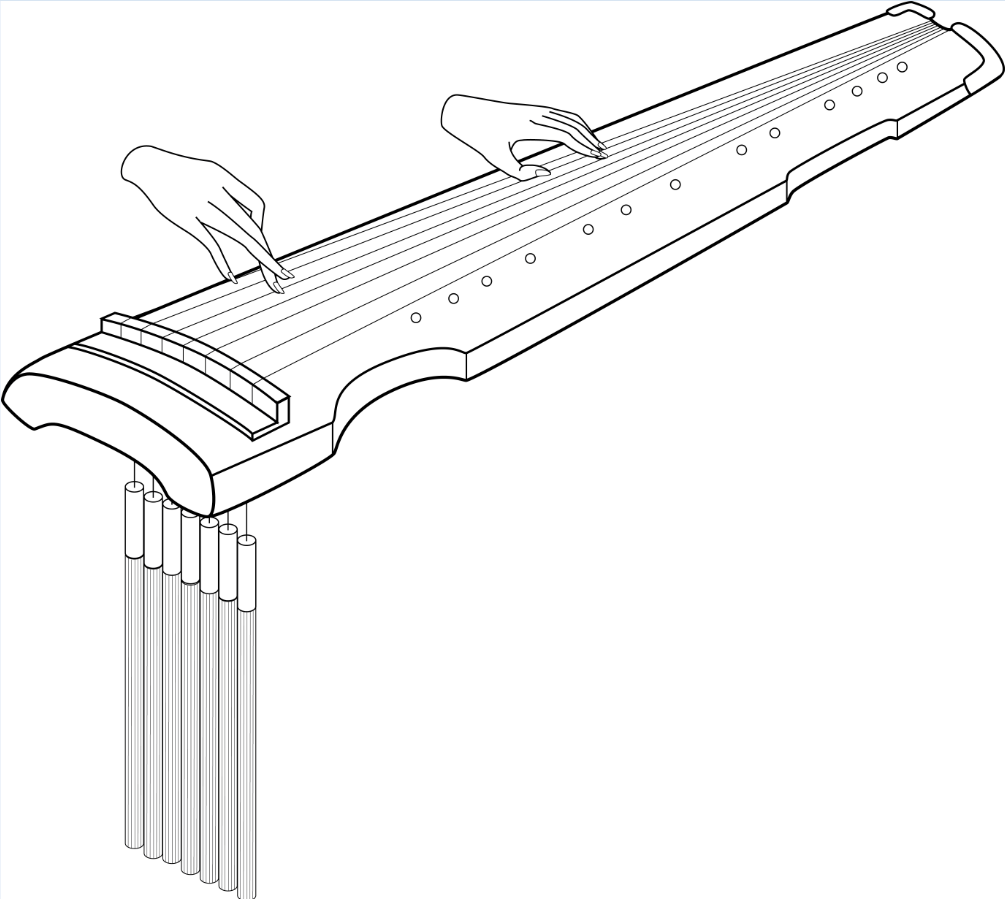
Guqin in Germany
Guqin and the environment are in continuous interaction.
They influence and transform each other.
In Germany, a land unfamiliar to the guqin,
it triggers a more innovate music, awakening another sound behind the surface of Germany.
Introduction of Guqin, produced by Global Music Academy.
《乌夜啼》
Wu Ye Ti — The Crow Cries at Night
《乌夜啼》以夜色中的乌啼为意象。与其说乐曲是在描绘一个具体的场景,不如说它是在声音与无声之间构造一个属于“夜”的空间。
琴声疏落而幽微,时而出现,时而隐没;每一个声音的余韵,以及声音消散之后留下的空白,都成为音乐的一部分。乌啼所带来的并不仅仅是哀愁,也包含着夜的寂静、遥远与独处。
本次录音于柏林艺术大学(UdK),以丝弦古琴演奏。丝弦柔和细腻的声音与悠长的余韵,使琴声在寂静中逐渐展开,也更突出了古琴音乐中“以声写夜”的特点。
English
Wu Ye Ti is a traditional Guqin piece inspired by the image of a crow calling in the stillness of the night. Rather than simply depicting a particular scene, the music creates a space of night through the relationship between sound and silence.
The sounds emerge sparsely and disappear into the surrounding silence. Each resonance, as well as the space left after the sound has faded, becomes part of the music. The crow’s call evokes not only melancholy, but also solitude, distance, and the profound stillness of the night.
This recording was made at the Berlin University of the Arts (UdK) on a silk-string Guqin. The soft and delicate quality of silk strings allows each sound to unfold gradually and linger in the silence, revealing one of the essential qualities of Guqin music: expressing the night through sound.
《鸥鹭忘机》
Oulu Wangji — Forgetting the Egrets
《鸥鹭忘机》是古琴曲中最能体现人与自然关系的一首作品。“忘机”并非忘记某件事情,而是放下机心——不再以计较、占有或控制之心面对自然。
传说中,人与鸥鹭相处于江湖之间,彼此没有猜疑,因此鸥鹭也不再因人的存在而惊飞。乐曲所表达的,正是这样一种人与自然之间没有防备、没有强求的状态。
琴声流动而疏朗,并不刻意模仿鸟鸣或水波,而是通过旋律的起伏、停顿与回环,呈现一种自由、闲适而无所执着的状态。所谓“忘机”,最终并不是远离自然,而是放下人与自然之间的界限。
本次录音于柏林艺术大学(UdK),以丝弦古琴演奏。丝弦温润而自然的声音,使琴音、余韵与想象中的水面、飞鸟和旷野彼此相融。
English
Oulu Wangji is one of the Guqin pieces that most deeply explores the relationship between human beings and nature. The title refers to the idea of wangji—letting go of calculation, intention, and the desire to control.
According to the traditional story associated with the piece, human beings and egrets could share the waters without fear or suspicion. Because there was no intention to capture or disturb them, the egrets no longer felt the need to fly away.
The music does not attempt to imitate birds or water literally. Instead, through flowing phrases, pauses, and recurring gestures, it evokes a state of freedom, ease, and unforced presence. To “forget the mind of calculation” is ultimately not to withdraw from nature, but to let the boundary between the human and the natural world become less distinct.
This recording was made at the Berlin University of the Arts (UdK) on a silk-string Guqin. The warm and natural resonance of the silk strings allows the sounds, their lingering echoes, and the imagined landscape of water, birds, and open space to merge into one another.
Flowing Water from the project of Das Wiesen Des Wasser
《梅花三弄》
Meihua San Nong — Three Variations on the Plum Blossom
《梅花三弄》是古琴传统曲目中最具代表性的作品之一。乐曲以凌寒而开的梅花为意象,通过主题在不同音区的三次呈现,表现梅花清逸、高洁而坚贞的品格。
古琴的散音、泛音与按音彼此交织,使音乐在清冷与温润之间展开。梅花之“清”并非单纯的寂静,而是在寒意之中仍保持着内在的生命力。
本次录音于柏林艺术大学(UdK),使用丝弦古琴演奏。丝弦柔和、温润而富有余韵的音色,使这首古曲呈现出更加古朴、细腻而含蓄的一面。
English
Meihua San Nong is one of the most representative works in the traditional Guqin repertoire. Inspired by the plum blossom blooming in the midst of winter, the piece evokes qualities of purity, resilience, and quiet strength. A central musical theme appears three times in different registers, each revealing a different aspect of the same image.
Through the interplay of open strings, harmonics, and stopped tones, the music moves between clarity and warmth. The plum blossom is not merely an image of stillness, but of life and inner strength enduring through the cold.
This recording was made at the Berlin University of the Arts (UdK) on a silk-string Guqin. The warm, delicate tone and lingering resonance of silk strings bring out the ancient, subtle, and contemplative character of the piece.
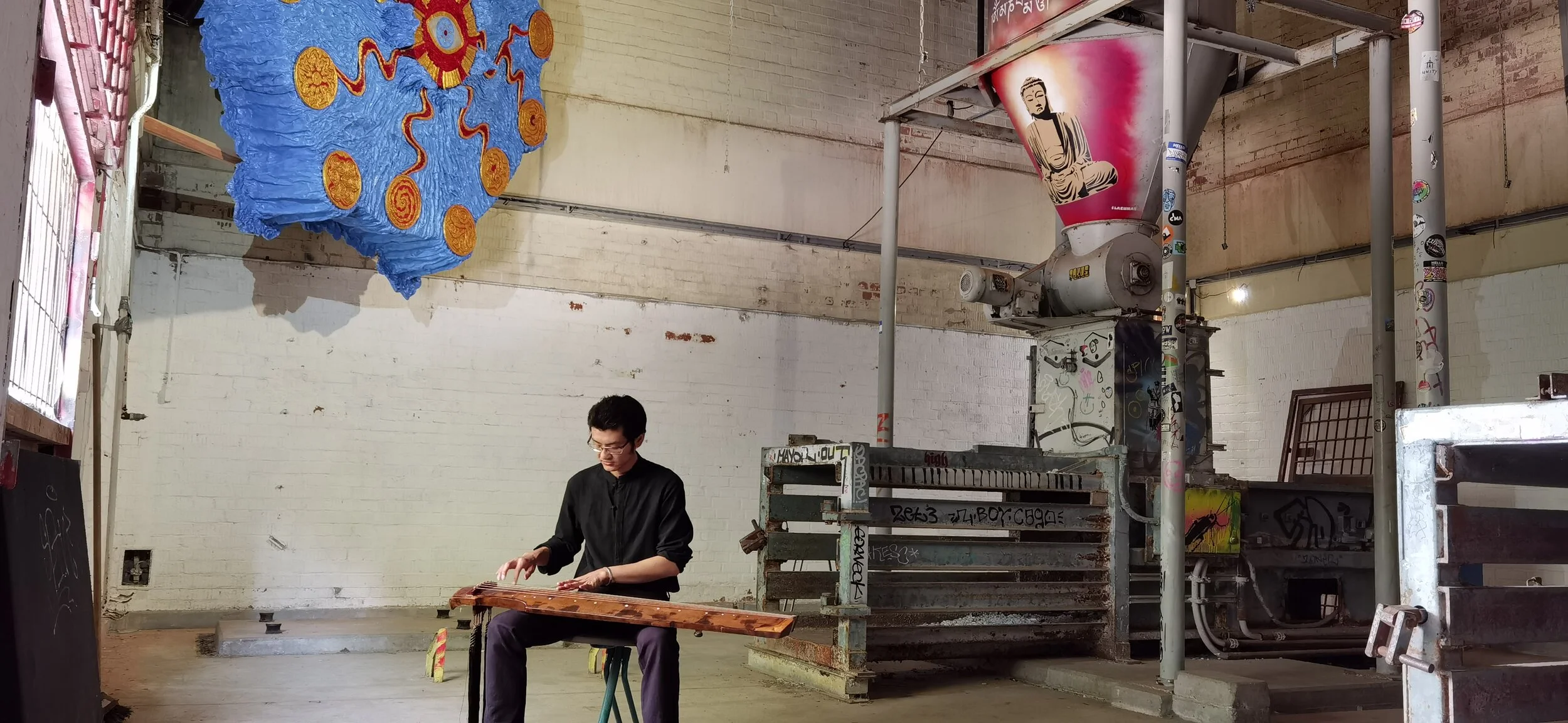
Guqin in the loft of Teufelsberg
Fantasy of Drinker in Raw Gelaende, Berlin
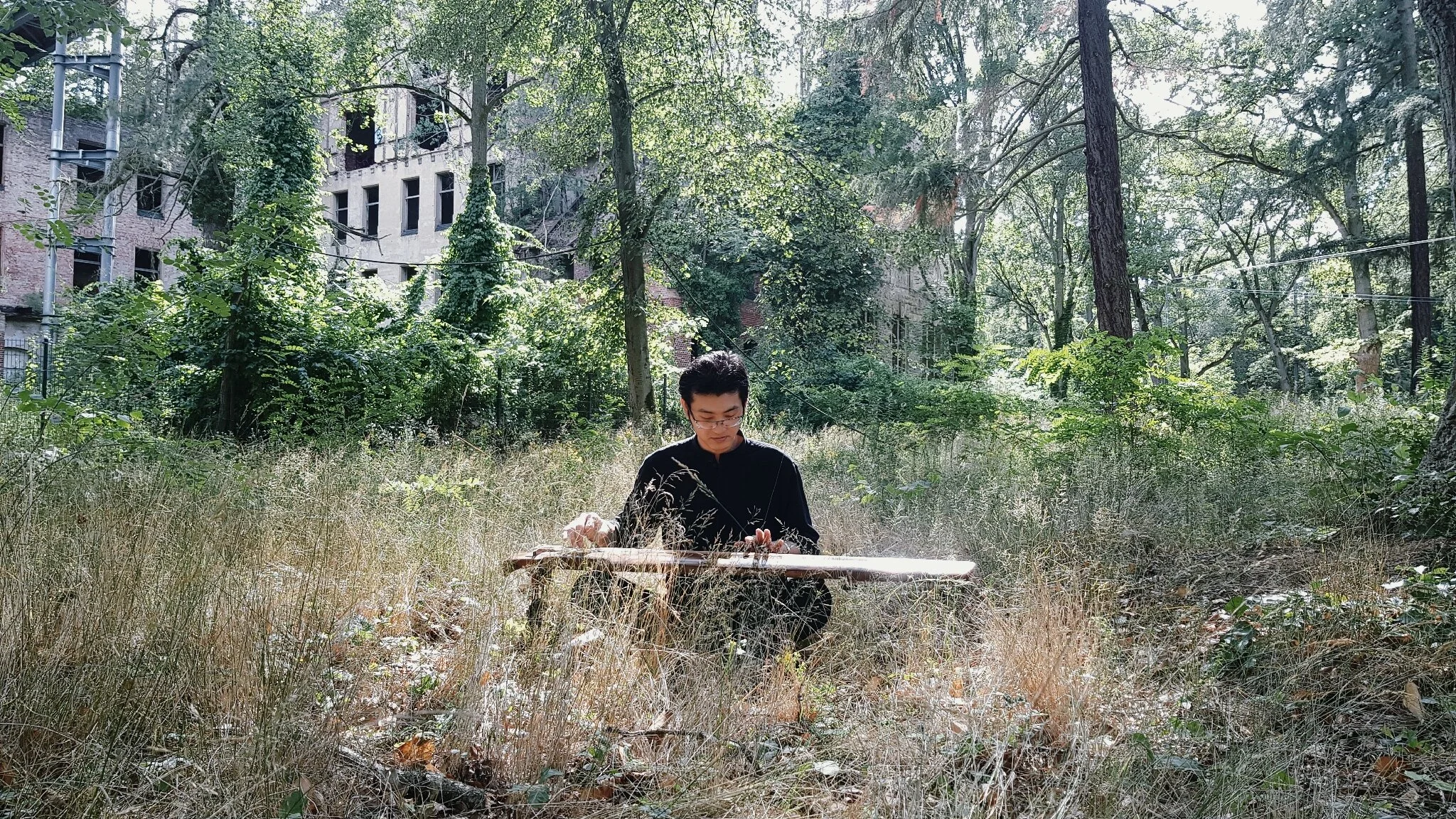
Guqin in Baum & Zeit Baumkronenpfad Beelitz-Heilstätten
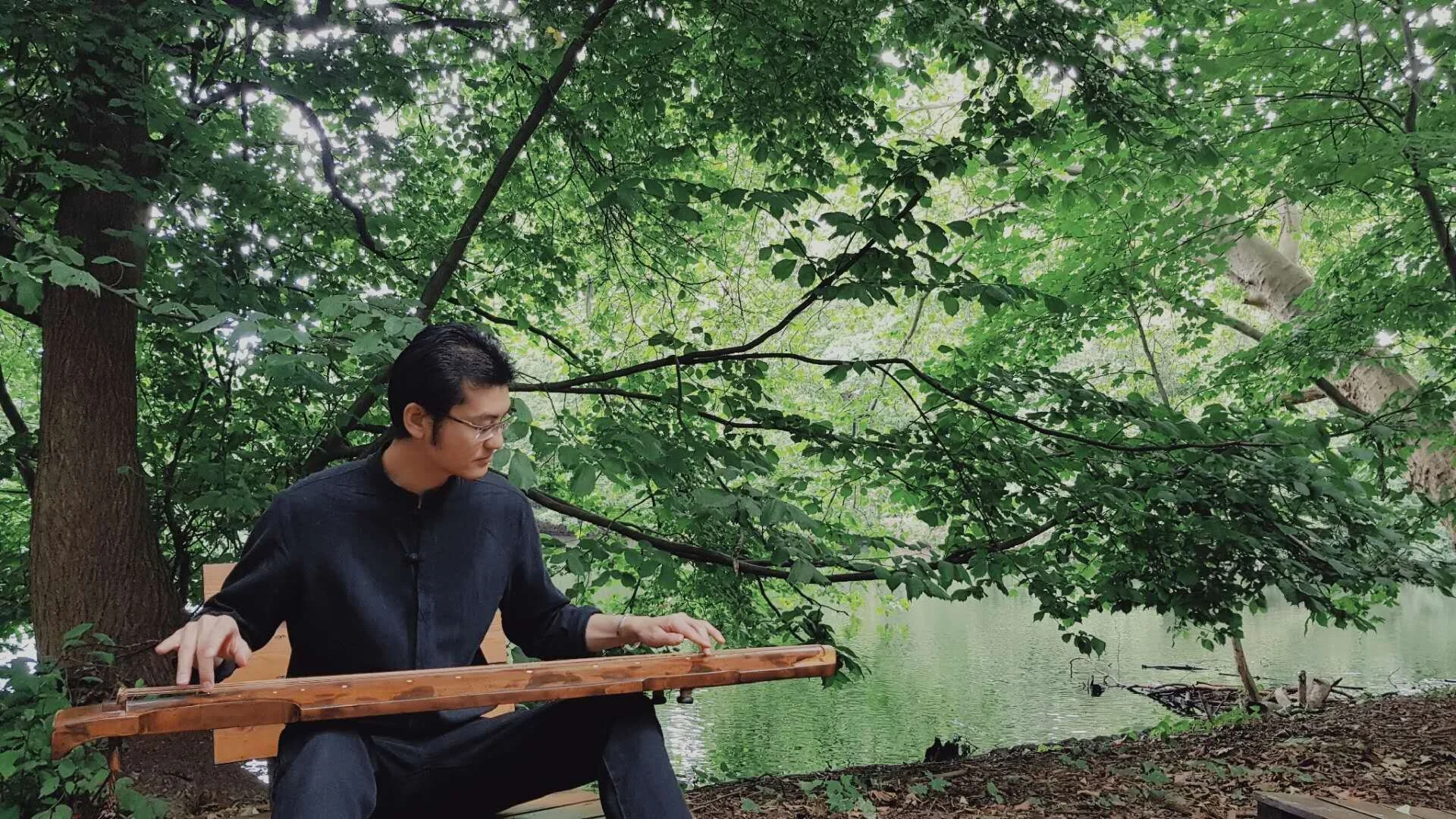
Guqin in Tiergarten
Guqin in Nature
In the interaction with nature,
Guqin transcends the limitations of time and space.
Natural environment is the best place for Guqin to practice.